Cart
0
🎉 Congratulations! You unlocked Complimentary Gift.

Solitaire round cut diamond stud earrings
$0
$ 0


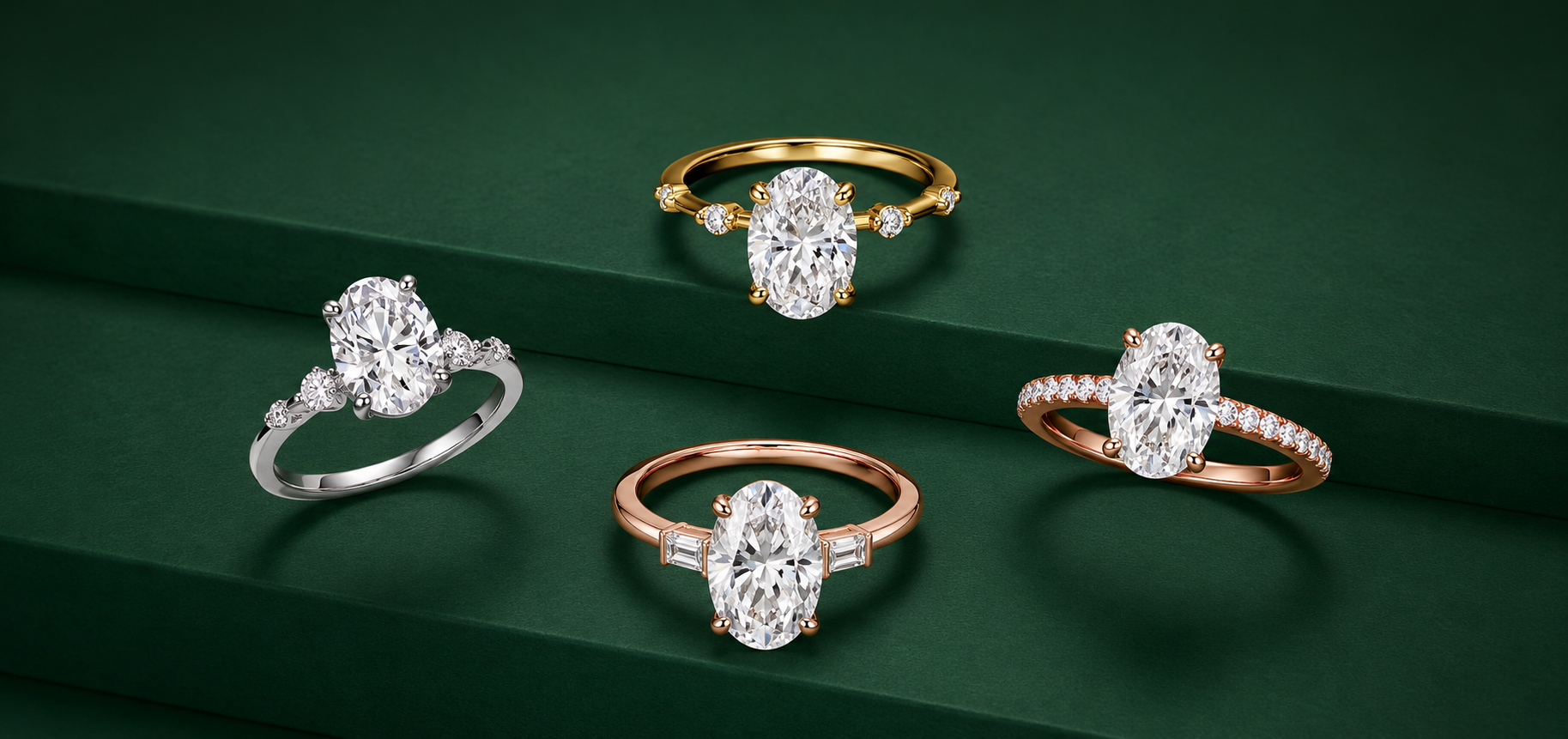
Choosing a diamond shape is one of the biggest decisions in the entire ring-buying process. It's not about picking whatever looks best in a single photo it's about choosing a shape that will be worn, admired, and lived in every single day. That decision deserves real research, not guesswork.
So, what is an oval cut diamond? In simple terms, it's a diamond shaped like an elongated circle rounded on both ends, with no sharp corners. It belongs to the same "brilliant cut" family as the round diamond, which means it's faceted to catch and reflect light from nearly every angle, giving it that signature sparkle.
Over the last decade, oval diamond engagement rings have become one of the most searched-for and requested styles in the industry and for good reason. Buyers love that an oval diamondlooks larger than a round diamond of the same carat weight, often costs less per carat, and visually elongates the finger. It's a shape that manages to feel both classic and current at the same time.
This guide covers everything: the origin of the oval cut, its anatomy, how to judge cut quality, the 4Cs as they apply specifically to ovals, ideal proportions, the notorious bow-tie effect, how ovals compare to other popular shapes, the best ring settings, and a step-by-step framework for choosing the right stone. By the end, you'll be able to shop with confidence and know exactly what questions to ask before you buy.
An oval cut diamond is a stretched, circular-shaped stone with rounded ends and no sharp points along its outline. It sits within the brilliant-cut family the same category as the round diamond which is the key to understanding how it performs in light.
Brilliant-cut diamonds are covered in dozens of small, precisely angled facets. Each facet functions like a tiny mirror: light enters through the top of the stone, bounces internally between facets, and exits back out through the crown. When those angles are cut with precision, this internal reflection repeats continuously, producing the bright, lively sparkle brilliant cuts are known for.
What separates an oval from a round diamond is purely the outline. Rather than shaping the stone into a perfect circle, the cutter stretches it along one axis while preserving the rounded edges giving it length and a distinctive silhouette without sacrificing brilliance.

The oval cut is widely credited toLazare Kaplan, a master diamond cutter who set out in the mid-1900s to build on the success of the round brilliant. His goal: retain the round's signature sparkle while creating a shape that made better use of the rough diamond material.
Cutting a diamond is always a balancing act between preserving carat weight and maximizing light performance. Round diamonds tend to sacrifice more rough material to achieve a perfect circle. Kaplan's oval design followed the natural contours of the rough stone more closely reducing waste and, in many cases, yielding a larger finished diamond from the same starting material.
Since then, advances in cutting technology and a deeper understanding of facet geometry have significantly reduced common oval cut issues (like the bow-tie effect, covered below), helping the shape grow into one of today's most in demand diamond cuts.
Brilliant faceting- the same light catching facet pattern used on round diamonds
Elongated silhouette -a stretched profile that visually distinguishes it from round stones
Strong light performance when well-cut- proportions matter more here than in almost any other shape
Finger-flattering length- the elongated shape can make fingers appear longer and slimmer

Carat weight measures mass, not visual size and this is where the oval cut has a real advantage. Because an oval spreads its weight across a longer, wider outline instead of concentrating it near the center (as a round diamond does), it delivers more visible surface area per carat. For budget-conscious buyers, that translates to a bigger-looking stone for the same spend.
As a member of the brilliant-cut family, an oval diamond is engineered with facets designed to maximize light return. But this only holds true when the cut is executed well two ovals with identical carat weight and clarity can look dramatically different depending on cut precision. This is exactly why cut quality should be evaluated before color or clarity when shopping for this shape.
The elongated shape draws the eye along the length of the finger, which is why so many buyers find oval diamonds flattering regardless of hand size or finger length a benefit that isn't universal across all diamond shapes.
An oval works equally well in a minimalist solitaire or a bold halo setting, meaning it doesn't lock you into one design era. It's a shape that reads as timeless in a vintage setting and equally current in a modern one.
Because round diamonds are the most in-demand shape, cutters lose more rough material shaping them into a perfect circle waste that gets priced in. Oval diamonds use more of the original rough stone, which typically brings the price per carat down, freeing up budget for a larger stone or a higher color/clarity grade.
| Part | What It Does |
|---|---|
| Table | The large, flat top surface of the diamond. It allows light to enter the stone and plays a major role in its overall brilliance. |
| Crown | The upper section located above the girdle. Its facets help direct incoming light into the diamond, enhancing sparkle and fire. |
| Pavilion | The lower portion beneath the girdle. Its angles are critical because they reflect light back through the top, creating brilliance. |
| Girdle | The thin outer edge where the crown and pavilion meet. It provides structural strength and helps protect the diamond from chipping. |
| Culet | The small point or tiny facet at the bottom of the pavilion. In well-cut modern oval diamonds, it is usually very small or not visible at all. |
An oval cut diamond typically has 56 to 66 facets spread across the crown and pavilion. Each facet works in concert with the others. when placed with precision, the result is even, all over brilliance rather than isolated flashes of light.

Cut is the single most important factor for an oval diamond. It's harder to standardize than with round diamonds because the cutter has to balance length, width, and depth simultaneously meaning two stones with identical measurements on paper can perform very differently in real light. Always request a video or in-person viewing before purchasing.
Diamond color runs from D (colorless) to Z (visible yellow tint). For oval diamonds, a grade between G and I typically reads as near-colorless once set, especially under normal indoor lighting offering strong value without a visible trade-off.
Because ovals have a large, open table, small inclusions can be slightly easier to spot with the naked eye compared to more heavily faceted shapes. Aiming for VS1 or higher is a smart, budget-conscious target that keeps the stone looking clean.
Carat measures weight, not visual size. Because ovals distribute their mass across a longer outline, you can often choose a slightly lower carat weight and still achieve the look of a larger stone redirecting that saved budget toward cut or color quality instead.
| Measurement | Ideal Range | Why It Matters |
|---|---|---|
| Length-to-Width Ratio | 1.35 – 1.50 | Creates a balanced, elongated appearance without looking too round or too narrow. |
| Table Percentage | 53% – 63% | Controls how much light enters the diamond and reflects back, influencing its brilliance. |
| Depth Percentage | 58% – 62% | Ensures the diamond looks proportional to its carat weight while maximizing light performance. |
| Symmetry & Polish | Very Good – Excellent | Improves the diamond's sparkle, brilliance, and overall finish. |
A ratio below 1.35 can look too round; above 1.50 can look overly narrow. Trying on a few different ratios in person is the most reliable way to find your preference.

The bow-tie effect is a dark, shadow-like band that can appear across the center of an oval diamond, resembling as the name suggests a bow tie. It occurs because light doesn't reflect with perfect evenness through an elongated shape, and it's tied directly to the cutting angles of the crown and pavilion. Ovals, pears, and marquise cuts are more prone to this than round diamonds because of their longer, narrower profile.
View the stone (or a video/photo of it) straight-on under normal lighting. Look for a darker band running across the center. Some stones show it clearly; others show only a faint version.
Yes, a skilled cutter can significantly reduce the visibility of the bow-tie effect through careful facet and proportion adjustments. It's another reason cut quality deserves close attention, since the bow-tie effect isn't linked to price, color, or clarity at all.
A soft, subtle bow-tie is common and rarely noticeable once a ring is worn day to day. A dark, heavy shadow, however, is worth reconsidering always review real photos or video of the specific stone before buying, not stock imagery of the same shape.

Round diamonds have long held the top spot as the most requested shape. Part of the reason comes down to how well they perform with light. The round brilliant cut was designed almost entirely around maximizing shine, since its facet pattern was refined over decades.
An oval diamond shares much of that same facet structure, so it offers a similar level of shine without giving up too much. Where it pulls ahead is in size and cost. Because an oval spreads its weight across a longer shape, it looks bigger than a round diamond of the same carat weight, and it usually costs less per carat too.

Cushion cut diamonds are shaped like a square or rectangle, but with softened, rounded corners instead of sharp points. This gives them a bit of a pillow-like look, which is where the name cushion actually comes from.
An oval diamond takes that softness a step further, with a fully rounded outline and no corners at all. If you like the gentle look of a cushion cut but want something smoother and more stretched out, an oval diamond often becomes the natural next choice.

A pear shaped diamond, sometimes called a teardrop, has one pointed end and one rounded end. This gives it a distinct, uneven look. That single point needs careful setting, since it is more exposed to bumps than the rest of the stone.
An oval diamond avoids this issue entirely by staying rounded on both ends. As a result, it is more forgiving for daily wear. It is also a safer pick for buyers who want a balanced look without worrying about protecting a delicate point.

Emerald cut diamonds have a rectangular outline with long, flat step facets instead of the small triangular facets found on brilliant cuts. This creates a clear, glassy look with wide flashes of light, rather than scattered shine.
An oval diamond, being a brilliant cut, is built with far more facets working together. This produces a livelier, more active shine that catches light from many small angles at once, rather than the broader flashes typical of an emerald cut.

Marquise diamonds have two pointed ends and a long, narrow body, giving them one of the most dramatic outlines of any shape. Like the pear cut, those points need careful protection once set into a ring.
An oval diamond keeps that same elongated feel but rounds off both ends completely. This makes it easier to set securely and less likely to chip along the edges, all while still giving a similar sense of length on the finger.

Solitaire - A clean, single-stone setting that keeps full attention on the diamond's shape and shine.
Hidden Halo - A ring of diamonds tucked beneath the center stone for a subtle extra flash of sparkle.
Halo - A full ring of accent diamonds that boosts perceived size and can help soften a mild bow-tie effect.
Three-Stone - Two side stones flanking the oval center, often chosen for its past-present-future symbolism.
Pave - Small diamonds set along the band for continuous shine that complements the center stone.
Bezel - A metal edge wrapping the diamond for maximum protection, ideal for active lifestyles.
Vintage-Inspired - Filigree and milgrain detailing that pairs naturally with the oval's decades-long bridal history.

| Metal | Best For |
|---|---|
| White Gold | A bright, modern look at a lower cost than platinum. It may require periodic rhodium re-plating to maintain its white finish. |
| Yellow Gold | Vintage-inspired designs and a warm appearance. It can also help mask a slight yellow tint in the diamond. |
| Rose Gold | A romantic, distinctive color with excellent durability thanks to its copper content. |
| Platinum | Maximum durability, naturally white color, and excellent long-term wear without the need for rhodium re-plating. |
Set your budget first - this prevents overspending on carat weight at the expense of cut quality.
Prioritize cut quality above all else - a smaller, well-cut oval will always outperform a larger, poorly cut one.
Choose your color grade based on metal - warmer metals (yellow gold) can offset a lower color grade; cooler metals (white gold, platinum) show tint more clearly.
Select clarity of VS1 or higher - this keeps the stone eye-clean without overpaying for flawless grades.
Compare certifications - only buy diamonds certified by an independent lab such as GIA or AGS.
Check the bow-tie effect - review the actual stone's photos/video, not a generic shape image.
Request multiple lighting videos - a single lighting setup can hide flaws that show up elsewhere.

| Factor | Lab-Grown Diamond | Natural Diamond |
|---|---|---|
| Appearance | Identical to natural diamonds with the same crystal structure, brilliance, and sparkle. | Identical to lab-grown diamonds in appearance, crystal structure, brilliance, and sparkle. |
| Durability | 10/10 on the Mohs hardness scale. Excellent for everyday wear and highly resistant to scratches. | 10/10 on the Mohs hardness scale. Equally durable and suitable for daily wear. |
| Cost | Typically 30–40% less per carat, offering better value for the same budget. | More expensive due to natural rarity, mining, and limited supply. |
| Sustainability | Lower environmental impact with less land disturbance and reduced water usage. | Traditional mining has a larger environmental footprint and requires more natural resources. |
| Resale Value | Generally lower because the resale market is still developing. | Stronger resale value with a well-established secondary market. |
0.50 carat - A budget-friendly entry point or ideal for side stones.
1 carat - The most requested size; a strong balance of visible size, price, and practicality.
1.50 carat - A noticeable step up in presence without jumping into a new budget tier.
2 carat - A bold statement size where cut quality becomes even more critical.
3 carats and above - A true centerpiece stone; in-person viewing and certification are essential.

Clean at home with warm water, mild dish soap, and a soft brush focus on the underside of the stone and around the prongs.
Store separately in a lined jewelry box or pouch to prevent scratching other pieces.
Get a professional inspection once or twice a year to catch loose prongs or wear early.
Avoid harsh chemicals like chlorine and bleach, which can damage metal settings and dull the diamond's shine.
Remove your ring before swimming, cleaning, gardening, or heavy exercise to reduce impact risk.
An oval cut diamond delivers a rare combination of size, brilliance, and value that few other shapes can match. Whether you're drawn to a minimalist solitaire or an elaborate halo design, this shape adapts to nearly any style and budget.
At Lumera Fine Jewellery, we help buyers find certified oval diamonds tailored to their exact priorities from cut quality to setting style. Take the time to compare your options, and choose a stone that feels right for you.
No. Oval cut diamonds are generally 10–30% less expensive than round brilliant diamonds of the same carat weight and quality, making them an excellent value for buyers seeking maximum sparkle.
The ideal length-to-width ratio is 1.35–1.50. This range creates a balanced, elegant oval shape without appearing too round or overly narrow.
Yes. A well-cut oval diamond offers exceptional brilliance and fire. While it sparkles differently than a round brilliant diamond, it still delivers outstanding light performance.
The bow-tie effect is a dark shadow that appears across the center of some oval diamonds. Choosing a well-cut oval diamond minimizes this effect and improves overall brilliance.
Yes. Oval diamonds have a larger face-up surface area than many other shapes of the same carat weight, making them appear bigger and more impressive.
For excellent value, choose VS1–SI1 clarity and G–H color. These grades typically appear eye-clean and near-colorless while offering better pricing.
Popular settings include solitaire, hidden halo, halo, three-stone, pave, and vintage-inspired designs. Each enhances the oval shape while protecting the diamond.
Yes. Oval diamonds are durable enough for daily wear, especially when securely set in a protective setting such as a six-prong or bezel design.
Platinum offers maximum durability, while white gold enhances brilliance. Yellow gold and rose gold provide a warmer, vintage-inspired appearance depending on your personal style. click-through rate, and match search intent for an Oval Cut Diamond Buying Guide.


